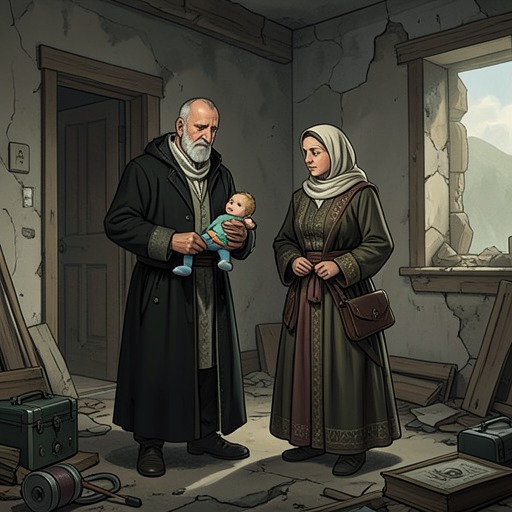
Jemima
Book of JobJemima is the first named of Job’s three daughters in the closing account of his restored fortunes. Though the text gives no individual speech or actions, her naming and inheritance place her within the family’s renewed prosperity and mark her as more than a number in the household.
Identity and Place in the Narrative
Jemima appears near the end of the Book of Job, after God has accepted Job’s prayer for his friends and Job’s fortunes have been restored. The account says that Job again had seven sons and three daughters; it then names the daughters in order, with Jemima first, followed by Kezia and Keren-happuch. It supplies no further biographical details about Jemima, and does not describe her life beyond this family setting.
Family and Inheritance
Jemima is identified as a daughter of Job and a sister of Kezia and Keren-happuch. The narrative says that Job’s daughters were unmatched in beauty among the women of the land, a distinction it gives to the sisters collectively rather than to Jemima alone. It also records that Job gave his daughters an inheritance among their brothers, explicitly placing them within the distribution of the family’s restored wealth.
Narrative Significance
Jemima’s brief appearance belongs to the account’s closing portrait of restoration: Job’s renewed household is described not only by its number of children and livestock, but also through the names and circumstances of his daughters. The inheritance detail is especially concrete, showing the daughters sharing in the family’s renewed prosperity alongside their brothers. Beyond these facts, the text leaves Jemima’s character and individual experience unstated.